
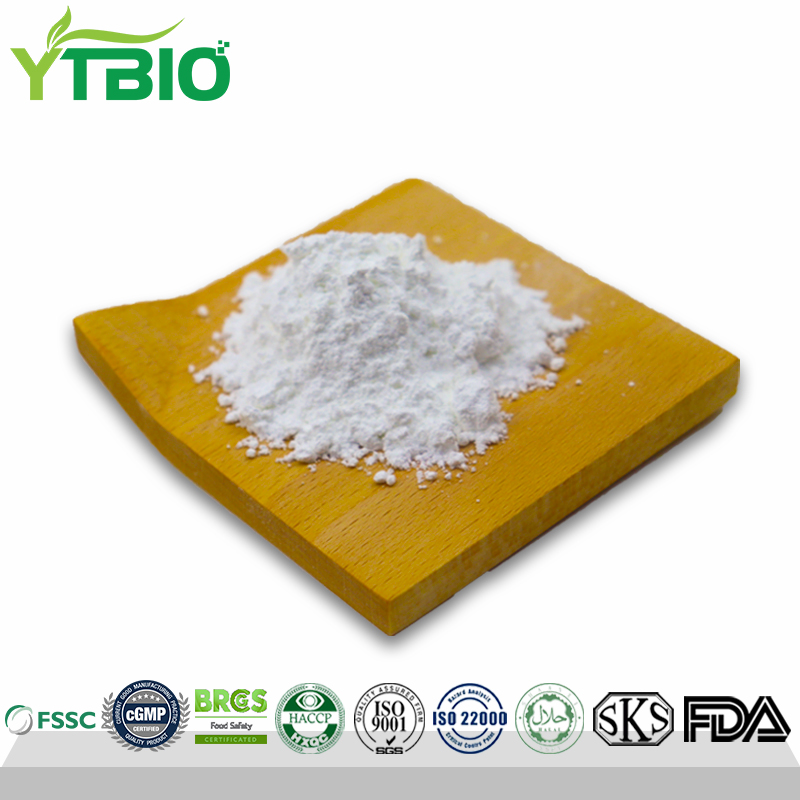
Bulk Supply Isomaltulose Powder CAS 13718-94-0
Do you know about isomaltulose?
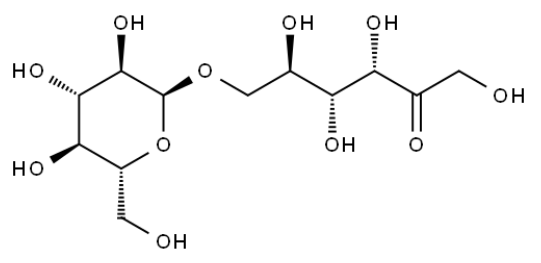
Isomaltulose (6-O-α-D-pyranosyl-D-fructose), also known as isosucrose, palatinose, and palatinose, is an isomer of sucrose with a molecular formula of C₁₂H₂₂O₁₁·H₂O and a relative molecular mass of 342.32. It is a new type of naturally occurring functional oligosaccharide found in trace amounts in sugarcane, sugar beets, and honey. It is also the only sweetener with no dosage restrictions and is a good sugar substitute. Because it is non-cavity-promoting, it has been extensively researched and developed worldwide.
The functions and applications of isomaltulose are constantly being explored. For example, recent discoveries have revealed its special benefits for the human brain. It is also a special sweetener with unique digestibility and absorption properties. It is well-suited for use in candies, beverages, and various foods.
Physical and Chemical Properties
Isomaltulose is a dextrose (6-o-a-D-pyranosyl-D-fructose) composed of glucose and fructose linked by an α-1,6 glycosidic bond. It is a crystalline disaccharide containing 1 mol of water of crystallization. It loses its crystallization form upon loss of this water. Its melting point is 123-124°C, significantly lower than sucrose's 182°C. Isomaltulose is non-hygroscopic, and even the addition of 1.5% to 15% citric acid does not increase its hygroscopicity, whereas the hygroscopicity of granulated sucrose increases significantly under the same conditions. When isomaltulose was mixed with citric acid and stored warm for 22 days, no invert sugar formation was observed. These properties indicate that isomaltulose is a more stable sweetener than sucrose for foods containing organic acids or vitamin C. Boiling tests on candies made with isomaltulose showed that its sweetness remained unchanged at 120°C, with only a slight browning effect. At temperatures as high as 140°C, isomaltulose began to exhibit browning, decomposition, and polymerization reactions. These reactions intensified significantly as the temperature continued to rise above 160°C. Therefore, isomaltulose is slightly less thermally stable than sucrose. At room temperature, the solubility of isomaltulose is only half that of sucrose, but this solubility increases dramatically with increasing temperature, reaching 85% of sucrose at 80°C. Therefore, foods containing isomaltulose produced at relatively high temperatures may crystallize when stored at room temperature. At the same concentration, isomaltulose has a slightly lower viscosity than a sucrose solution. Isomaltulose has similar sweetness properties to sucrose. Its initial taste bud stimulation is faster than sucrose, and its peak sweetness is similar to sucrose, but its final sweetness is weaker than sucrose. Isomaltulose has no peculiar smell and is 50% as sweet as sucrose. It also does not change with temperature. When isomaltulose is used in candies and chocolates, no significant difference is found between it and sucrose.
Advantages and Suitable Consumers of isomaltulose
1) Does Not Cause a Surge in Blood Sugar and Insulin Levels
After consuming isomaltulose, the cumulative increase in blood sugar levels is much lower than that of sugar. The changes in blood insulin and blood sugar levels are balanced, indicating that isomaltulose is absorbed much more slowly than sucrose, making it suitable for diabetics.
2) Non-cariogenic, making it particularly suitable for children.
Caries occur because plaque, which adheres to the tooth surface, harbors numerous bacteria. When high levels of sugar are consumed, bacteria within the plaque, such as Streptococcus mutans, ferment the sucrose to produce acid, which dissolves calcium and causes decay. Furthermore, Streptococcus mutans converts sucrose into insoluble, highly adherent glucans, which adhere to teeth and form plaque. Isomaltulose cannot be utilized by oral cavity-causing microorganisms and, consequently, does not produce insoluble glucans. Therefore, it does not form plaque, which contributes to tooth decay and periodontal disease. Therefore, it does not cause tooth decay. Therefore, isomaltulose not only does not cause tooth decay itself, but also effectively inhibits the decay caused by sucrose.
3) Suitable for people with high blood pressure, high blood lipids, obesity, and those who are afraid of obesity.
Isomaltulose is low in calories and can be digested and absorbed like sucrose. Its caloric value is approximately 4 kcal/g, making it particularly suitable for people with high blood pressure, high blood lipids, obesity, and those who are afraid of obesity.
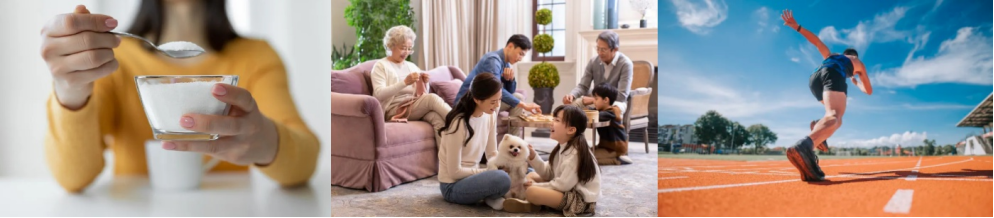
4) Suitable for Athletes
Its slow hydrolysis and absorption rate makes it particularly suitable for athletes. Athletes need a long-lasting energy source to maintain endurance and reduce fatigue. Once isomaltulose enters the body, it is hydrolyzed in the small intestine by the enzyme isomaltase into glucose and fructose, the same products as sucrose, for digestion and absorption. Since its hydrolysis rate is one-fifth that of sucrose, it is expected to be absorbed much more slowly than sucrose. Furthermore, isomaltulose is fully digested and absorbed into energy, making it particularly suitable for providing energy during long-term physical activity.
5) Suitable for the General Population
Isomaltulose is an excellent bifidobacterium proliferation factor. Although it cannot be utilized by the human body and most microbial enzymes, it can be broken down and utilized by bifidobacteria in the human intestine, promoting their growth and reproduction, maintaining intestinal microbial balance, and benefiting human health. Therefore, isomaltulose is suitable for the general population.
Application of isomaltulose
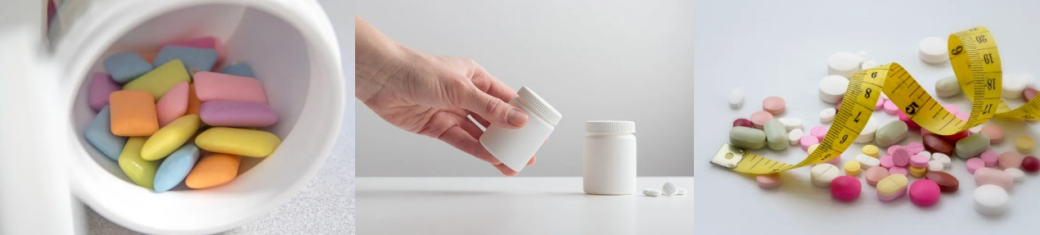
1) Low-sugar tooth-protecting foods
Currently, there are more and more low-sugar foods on the market, including oligosaccharides such as xylitol and maltitol, as well as natural sweeteners such as stevioside. Compared with other sugar alcohols, isomaltulose has lower hygroscopicity. It has almost no hygroscopicity at 25°C and 70% humidity, which is beneficial to improving the storage stability of the product. It also has a flavor similar to sucrose, which helps release other flavor substances and flavors. If the sweetness is not enough, it can be mixed with other high-sweetness sweeteners in proportion.
Isomaltulose cannot be used by oral microorganisms that cause tooth decay, so it will not produce insoluble polydextrose. Not only does it not cause tooth decay itself, it also has the effect of inhibiting tooth decay caused by sucrose. Using isomaltulose to make sugar-free chewing gum has a certain protective effect on teeth.
2) Weight-loss foods
According to the latest research report, the mechanism of obesity is that LPL in the human body's fat group is activated by insulin, which quickly absorbs neutral fat into adipose tissue. Because isomaltulose does not cause insulin secretion after digestion and absorption, it does not activate LPL activity. Therefore, the presence of isomaltulose makes it difficult for oil to be absorbed into adipose tissue.
Taking advantage of the characteristics of isomaltulose that inhibit fat accumulation and promote fat oxidation and decomposition, isomaltulose can be used as one of the raw materials and combined with some healthy and slimming plant extracts to develop very healthy and beneficial slimming foods.
3) Foods for diabetic patients
Because isomaltulose is slowly and evenly absorbed by the human body within 6 hours, blood sugar levels and insulin concentrations will not rise rapidly, and will not affect the stability of physical functions and mental state; and because there is always energy supply, hypoglycemia, which is common in diabetics, will not occur. Therefore, isomaltulose is often made into foods for diabetics and hyperglycemic patients.
4) Brain-boosting Food
In recent years, foreign experts and scholars, especially those from Japan, have conducted research and testing using methods such as the Kapelin psychological test and human brain nerve electromagnetic waves. They have found that after consuming isomaltulose, the brain's attention span is much longer than after consuming sucrose, and its effect on relieving mental stress is also much stronger than after consuming sucrose. This characteristic makes it particularly useful for people who need to concentrate for a long time, and is particularly suitable for students.
FAQ
Q1: Are you a direct manufacturer? What are your capabilities?
A: YTBIO is a direct supplier with its own manufacturing facilities. We have been deeply engaged in the biological raw materials industry for 12 years, featuring GMP-certified workshops, end-to-end quality control, and OEM/ODM customization capabilities. We possess ample annual production capacity to reliably fulfill orders at the ton scale.
Q2: Are the products compliant? Can they be exported?
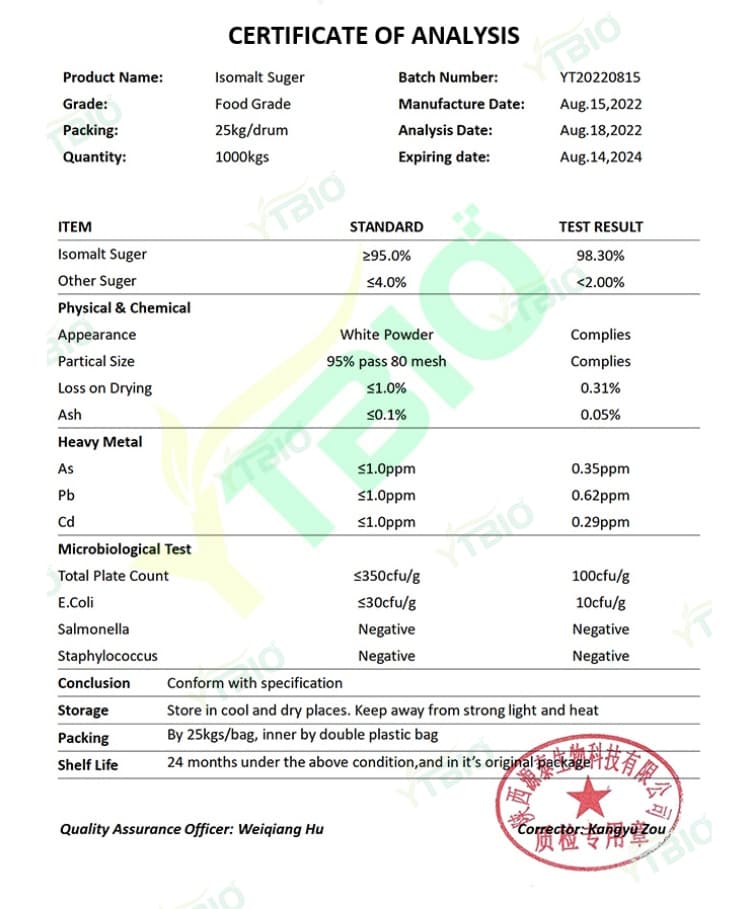
A: We hold certifications including ISO9001, ISO22000, HACCP, HALAL, KOSHER, and FDA. Each batch comes with a Certificate of Analysis (COA) and meets export standards for major global markets.
Q3: What are the application areas?
A: Sports nutrition, functional beverages, baking, meal replacements, dietary supplements, sugar-free foods, etc.
Q4: What is the shelf life and storage method?
A: 24 months; store in a cool, dry place, away from light and tightly sealed.
Email: sales@sxytbio.com
WhatsApp/phone: +86 17782577059
